


Our Approach to Anesthesiology Critical Care Medicine
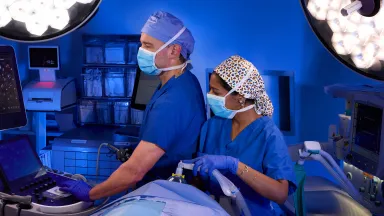
Montefiore Einstein Anesthesiology Critical Care Medicine is renowned for innovation and excellence in research, education and perioperative clinical care. We provide comprehensive and state-of-the-art integrated care for our most critically ill patients. Our team comprises world-renowned anesthesiologists who are fellowship-trained in critical care medicine with expertise in caring for critically ill medical and surgical patients. Among these are patients undergoing abdominal organ transplantation, hepatobiliary surgery, complex head and neck surgery, as well as general, vascular, aortic and thoracic surgeries and those with complex medical and surgical conditions. As a key partner in the Surgical Intensive Care Unit (SICU) and Post-Anesthesia Care Unit (PACU), our team of intensivists collaborates closely with specialists from the Departments of Surgery and Medicine, nurses and respiratory and physical therapists, among others, to ensure the highest-quality patient care throughout each patient’s perioperative experience. We prepare patients for surgery and ensure they receive the multidisciplinary care needed to recover to their pre-surgical activity levels. Montefiore Einstein is ranked in the top 1% of all hospitals in the nation for complex specialty care according to U.S. News & World Report.
Seamless, Multidisciplinary Care
To increase capacity for care, Montefiore Einstein Anesthesiology Critical Care Medicine has expanded coverage into the Moses Surgical Step-Down Unit (SDU), an intermediate level of care for patients who are stable enough to leave the Surgical Intensive Care Unit (SICU) but not yet ready to be moved to a regular hospital floor. Our team of intensivists and physician assistants is committed to ensuring continuity of care across our SICU, PACU and SDU, an essential component for optimizing the treatment of high-risk surgical patients with complex conditions.
Our critical care anesthesiologists also serve as resources throughout the hospital when emergencies occur, responding to emergent situations that may arise in our catheterization labs, endoscopy suites or during interventional radiology procedures. By serving in this emergency response capacity, our intensivists further play an essential role in the multidisciplinary care of our critically ill patients.
Advanced Diagnostics & Treatments
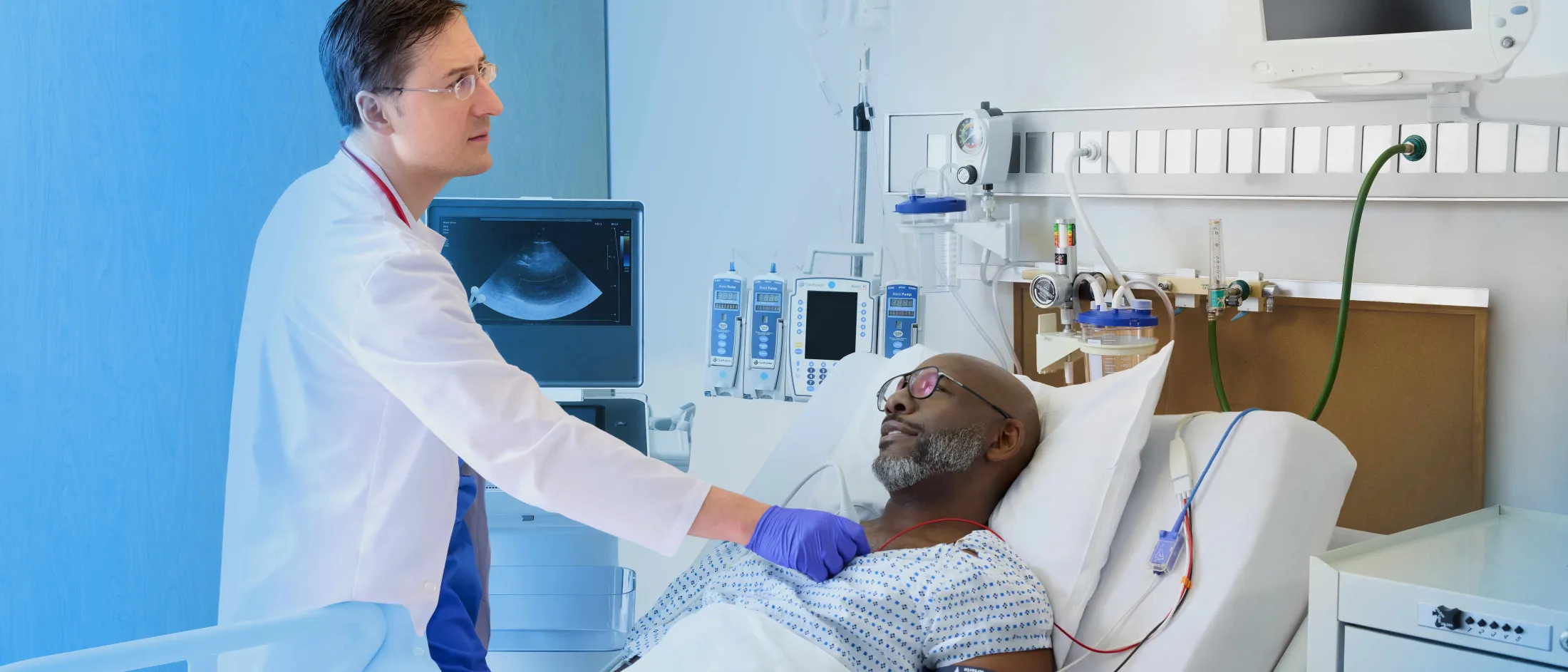
Montefiore Einstein Anesthesiology Critical Care Medicine provides access to the latest anesthesiology techniques and technologies to help improve patient safety and provide the highest quality of care for our critically ill patients. We employ the most advanced non invasive and invasive monitoring techniques, including hemodynamic and neurological monitoring. Our team uses point-of-care diagnostic tools such as echocardiography and point-of-care ultrasound (POCUS) to guide treatment plans and ensure optimal outcomes.
We provide the latest evidence-based and personalized care for patients, focusing particular attention on addressing conditions associated with organ dysfunction, acid-base and electrolyte imbalances, coagulopathy and blood loss. Our intensivists specialize in advanced airway management and mechanical ventilation, renal replacement therapies, extracorporeal circulation technologies such as extracorporeal membrane oxygenation (ECMO), titrating vasoactive medications and hemodynamic support.
Clinical Trials for Anesthesiology Critical Care Medicine
We are spearheading numerous clinical trials through which patients can access emerging technologies and innovative treatments that may otherwise not be available to the public. One of our current clinical trials is a prospective, multi-centric randomized controlled trial led by Matthias Eikermann, MD, PhD, Chair of the Department of Anesthesiology, studying the effects of postoperative oral suvorexant, an orexin receptor antagonist, on sleep architecture and delirium in the cardiac intensive care unit (ICU). (ID: NCT04092894)

Research
We lead collaborative research, numerous studies and clinical trials, some of which are funded by the National Institutes of Health (NIH).
Through our Digital Health Laboratory, our researchers have amassed and meticulously validated extensive perioperative and surgical ICU retrospective cohort datasets that are used in a range of research projects including developing machine-learning-based prediction instruments. With a strong peer-reviewed publication record, our digital health team of full-time data analysts, bioinformatics experts, and statisticians has carefully studied and published research on a wide range of topics, including sedation and neuromuscular blocking agents in mechanically ventilated patients, neurocognitive impairments, early mobilization in the ICU and postoperative pulmonary complications.
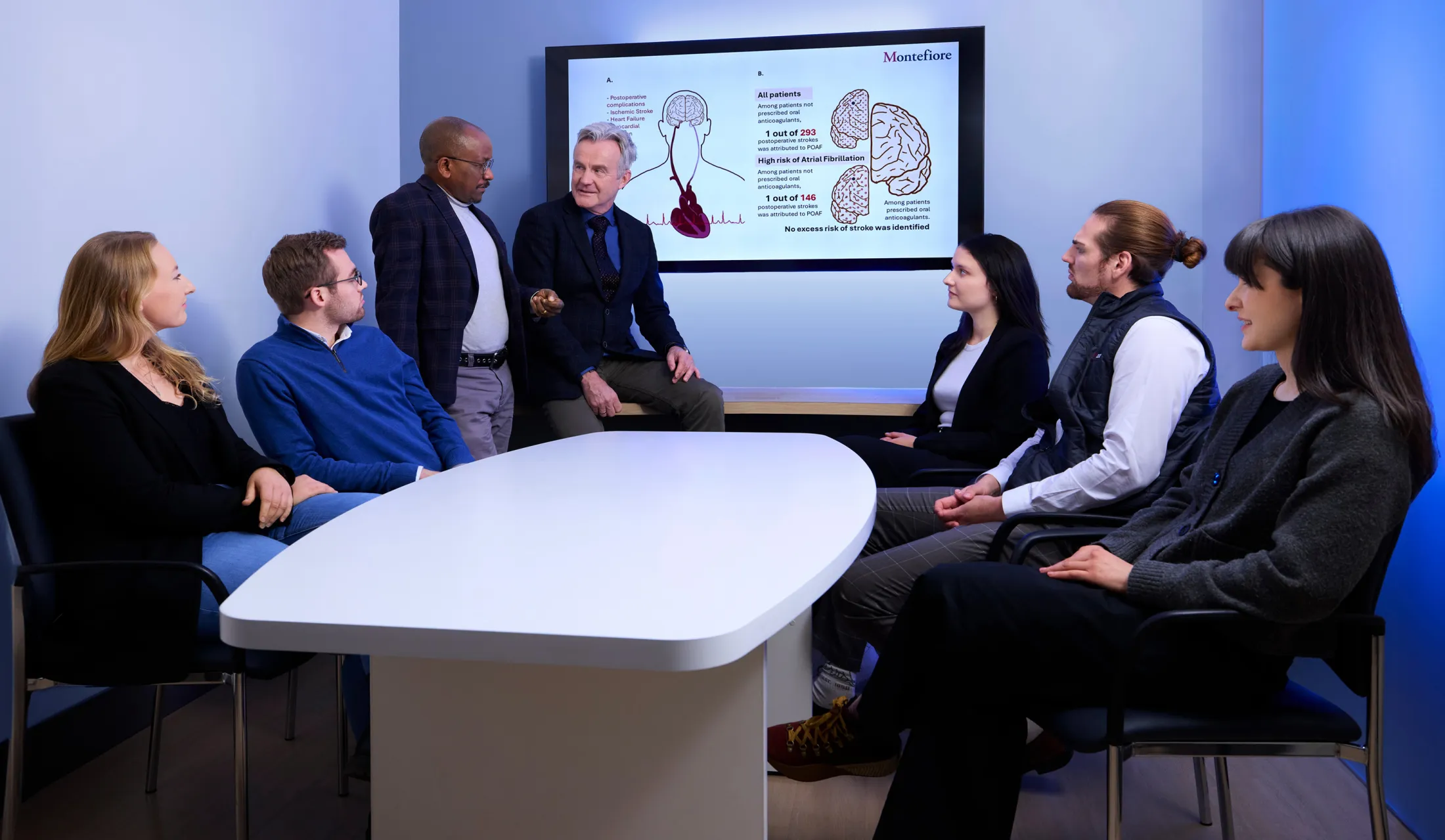
A recent landmark study from our Digital Health Laboratory, published in Nature Medicine, exemplifies our impact. It examined the role of anticoagulation therapy in modifying stroke risk associated with new-onset atrial fibrillation after non-cardiac surgery. Analyzing more than 250,000 patients who underwent non-cardiac surgical procedures across multiple centers, we demonstrated that new-onset postoperative atrial fibrillation (POAF) occurs predictably and increases ischemic stroke risk. Our researchers also found that postoperative oral anticoagulation medication reduced stroke risk during the first year after surgery.
Our Critical Care Medicine physicians are also involved in numerous multicenter randomized controlled trials that focus on the optimal management of critically ill patients. These trials use a wide range of pharmacological management strategies for areas such as delirium prevention, sedation and insomnia treatments, as well as non-pharmacological strategies, such as nutrition, exercise, early mobilization and sleep hygiene. Our Department is a world leader in the field of early mobilization in the ICU and has published innovative clinical recommendations in high-impact factor journals including The Lancet and The Lancet Respiratory Medicine. We provide individualized symptom control treatment for our most vulnerable patients who require postsurgical mechanical ventilation, ensuring an optimal healing process without a prolonged medically induced coma.
Quality Assurance & Performance Improvement
Linking our clinical research and bedside care, Montefiore Einstein Anesthesiology Critical Care Medicine is committed to quality assurance and performance improvement. Together with our nursing and medicine colleagues, we routinely track key outcomes and work to address any issues during the perioperative process. For example, we analyze the efficient transfer of patients, central line-associated bloodstream infection (CLABSI) and postoperative early mobilization.
We are constantly working to advance our quality assurance and performance improvement initiatives to enhance patient care, safety and outcomes. We are leaders in instituting early ambulation for high-risk patients to optimize their outcomes. This initiative involves an interprofessional effort with Nursing and Physical Therapy and includes the implementation of a SICU Optimal Mobilization Score (SOMS) algorithm to assess which patients have the highest need for early mobilization.
Anesthesiology Critical Care Medicine Education & Training
Montefiore Einstein Anesthesiology Critical Care Medicine is committed to training the next generation of critical care physicians. Residents and fellows are provided extensive clinical and research opportunities, structured didactics, mentorship and broad exposure to the challenges faced in the care of critically ill patients after acute surgical interventions have been completed. We have developed a rigorous curriculum for our residents’ Critical Care Medicine rotation, which includes a monthly journal club and a range of lectures on critical care medicine and various aspects of postsurgical recovery. Our trainees are involved in all aspects of perioperative patient care and learn to function as part of the ICU team.
Through our one-year Anesthesiology Critical Care Medicine (ACCM) Fellowship—accredited by the Accreditation Council for Graduate Medical Education (ACGME)—fellows gain critical care experience from our team of expert fellowship-trained anesthesiology faculty as well as specialists from our Departments of Medicine and Surgery with a focus on integrated care and collaboration. Fellows rotate through the surgical ICU, the cardiothoracic ICU and several medical ICUs in collaboration with the Pulmonary Critical Care Division. Fellows also have the support of our Digital Health Research Lab and develop their research skills utilizing large data sets from our patient population.
Your Anesthesiology Critical Care Medicine Team

William J. Sauer, MD
Our intensivists are double-board certified in anesthesiology and critical care medicine. Our team collaborates closely with specialists from the Departments of Surgery and Medicine to enhance patient safety and provide the highest quality of multidisciplinary care for our most critically ill patients with complex conditions.
